The Project Helsingør and Helsingborg community |
|
 |
|
|
|
Introduction |
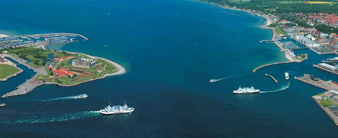
The cities of Helsingborg and Helsingør are both ancient cities separated by a 4000 metre wide sound
and a 20- minutes ferry ride. Today cooperation between the two cities are extensive in many fields.
The ECO-City demonstration sites in Helsingborg and Helsingør comprise a whole integrated trans-national community approach to energy efficiency and
sustainable energy supply. The development is in-line with the existing close cooperation between the cities and constitutes an extension of their existing
policies towards a more sustainable development.
The ECO-City project will set a reference for new standards to prevail in the community both in retrofitting, new buildings, energy supply and use of Polygeneration.
Furthermore, the initiative will be anchored in the whole community through training of SME's, janitors corporation and through extensive dissemination.
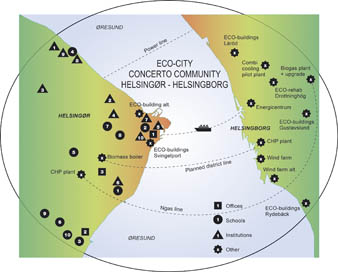
The following picture show demo sites of the integrated whole community approach.
|
 |
|
The overall objective
|
 |
Renewable energy supply (RES)
• 2 MW wind turbines
• 5,5 MW biomass boiler
• 228 m2 solar collectors for domestic hot water
• Photo Voltaic plants
|
|
|
 |
Energy efficiency in buildings
• 543 new ECO-dwellings
• 259 dwellings ECO-refurbished
• 37,884 m2 tertiary buildings refurbished
|
|
|
 |
Polygeneration
• Extension of an existing biogas plant producing
gas for public transport
|
|
|
 |
Integration of RES and RUE
• Extra RES covers need of included ECO
buildings after improving their energy efficiency
by various RUE actions
• RUE in tertiary buildings covering administration
offices, schools and institutions
|
|
|
 |
Specific innovations
• New type of comfort metering and control
system
• Potential of geo-exchange and energy storage
|
|
 To Top To Top
|
|
|
|
|
|
|
|
|
PROJECT AND SUBCOORDINATORS |
|
|
|
 |
|
|
|
|
|
|